Commentary: How Tokyo Olympics moved from a story of Japan's renewal to become a litmus test for leaders
WASHINGTON: The Olympics spin narratives that transcend time. They anoint sport legends in the winning athletes who dominate their sports, and in the losing competitors who confront defeat but never surrender backbone or grit.
The sporting games tell stories of a host nation'southward aspirations, which can range from recovery and renewal and elevated international status to the celebration of unique cultural traditions.
The Olympics take the temperature of the geopolitical moment. Their diagnostic fills us with hope when they reaffirm our ability to transcend national divisions, or with dread when the games are highjacked past international discord.
Like its predecessors, the Tokyo 2022 Olympics is an incubator of narratives. But these Olympic Games are similar no other.
Coming a year behind schedule in 2021, and yet sporting a 2022 brand, it is not just that the narrative incubator has been running longer, only that the storylines are more poignant.
READ: Team Singapore at the Tokyo Olympics: What and who to look out for?
As the start ever Olympics hosted during a pandemic, Tokyo 2022 volition provide an account of the match between scientific discipline versus virus (and supply a ledger on the vast resources inequities among nations in their access to COVID-nineteen vaccines).
Information technology volition take mensurate of the rift betwixt President Joe Biden's Usa and President Eleven Jinping's Communist china. Hosted but 6 months ahead of the Beijing 2022 Winter Olympics, Tokyo 2022 volition provide armament to the emerging focal point of U.s.a.-China strategic rivalry.
Just the story that Japan wants to tell the world has also shifted profoundly from when it won the 2022 bid in 2022 to the bodily games. Sure, recovery continues to be the headline, but from what?
While Japan has a stiff example to make for its national endeavor to rebuild from the Triple Disaster (the 2022 earthquake, tsunami and Fukushima nuclear accident), no such assuredness is yet possible in the thick of the boxing the world is waging against COVID-19.
READ: Commentary: COVID-xix is making the Tokyo Olympics a logistical nightmare
TOKYO'S COVID-19 SAFETY MEASURES
Equally we apace approach the opening ceremony on Jul 23, Tokyo is yet again under a state of emergency to help reduce the spread of COVID-19, and much is on the line for the Japanese government and Olympics organisers to ensure the games are conducted safely for athletes, staff, and host city residents.
Notwithstanding, many experts still worry that not enough is existence washed to prevent the games from turning into a superspreader result, especially as Nihon sees an uptick in cases again this month and a ascent in the delta variant domestically.
READ: Olympic Village COVID-xix infection bubble already 'broken': Health expert
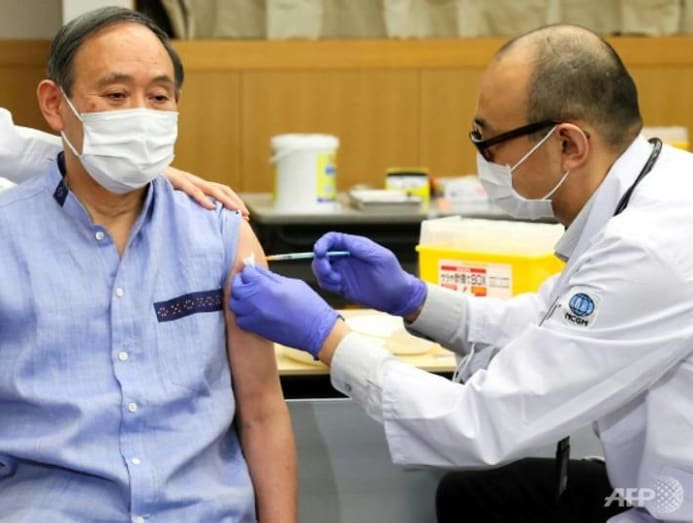
For one, Japan's vaccination rollout has been slow due to limited vaccine supply, a shortage of doctors and nurses, and its own bureaucratic process; currently 22 per cent of Japan's population is fully vaccinated and 34 per cent has received at least one shot.
Though vaccines have meant an easing of restrictions and a return to some sense of normalcy for places like the United States, this volition not be the example for Japan in fourth dimension for the Olympics. Information technology will still take some weeks yet earlier the majority of the population is fully vaccinated, leaving the Japanese population susceptible during the games.
Equally a result, organisers will demand to rely heavily on other scientific discipline-based disease mitigation efforts, which volition ensure that Tokyo 2022 looks and feels like no other Olympics in history.
READ: Commentary: Nippon was right to proceed belongings the Olympics
Though overseas spectators were banned from attention the games weeks ago, it was announced concluding week that near all domestic spectators volition also exist prohibited. 96 per cent of the competitions will be closed to fans, with those allowing spectators doing so at express capacity.
Meanwhile, for athletes, there accept been strict measures in place to monitor for signs of disease, such as daily testing, and mask requirements in the Olympic Village fifty-fifty if vaccinated. Contingencies such as a "fever clinic" with isolation rooms where PCR tests can be administered and an "isolation hotel" outside the hamlet have been bundled.
Whether these and other precautions will be plenty to finish the spread during the games is notwithstanding to be seen, but recurring announcements of infections amid staff and competitors are not encouraging.
READ: Commentary: While in quarantine, athletes face swell difficulty keeping up preparation for Tokyo Olympics
Niggling CHANCE FOR DIPLOMACY
Olympics are a high season for diplomacy. Notwithstanding, there is a particular rhyme and rhythm to the Tokyo games. A main line of attempt for Japanese diplomacy over the past year has been to earn a vote of confidence from earth leaders on Japan's ability to weather condition the COVID-19 claiming and deliver a prophylactic Olympics.
Such was the sentiment conveyed past the November 2022 G20 leaders' statement, Japanese Prime Minister Yoshihide Suga'southward in-person visit to the White House in April – the first by a foreign leader in the Biden administration – and the G7 communique last calendar month.
Only at that place volition be no brisk diplomatic activeness during these games. Omnipresence by foreign leaders will be sparse and the chances that the Olympics could provide a spark for a diplomatic quantum are low.
Due south Korean and Japanese diplomats squabbled over the possibility of hosting a leaders' meeting if South Korean President Moon Jae-in were to nourish the games; in the end, Moon decided not to nourish.
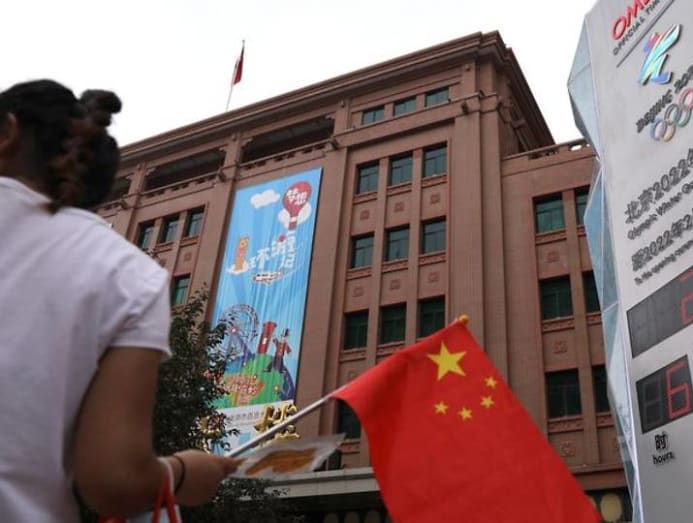
Neither Biden nor Xi will travel to Tokyo, and yet the geopolitical rift of the two superpowers will frame the games – not only because of the intensified focus on the competence of democracies equally an nugget in strategic competition, but besides because the shadow of a potential boycott of Beijing 2022 over homo rights violations looms large.
READ: Commentary: A compassion China can't seem to ditch its wolf warrior diplomacy
Every Olympics tells a story about its host nation's traversed path and its dreams for the future. The initial aspiration of Tokyo 2022 was to showcase Nippon's resilience and recovery from the Triple Disaster brought about by nature's wrath and bureaucratic incompetence.
Then-Prime Minister Shinzo Abe saw in the Olympics a capstone to his premiership, geared to tell the world that Japan was back. But Abe resigned abruptly concluding summer due to illness and his correct-mitt man Yoshihide Suga was all-powerful as his successor.
Today, the intended message is that the earth has not been kneecapped by COVID-19. But the run a risk that a safe Olympics is possible has not been lost on the Japanese public who remains deeply skeptical of the wisdom of moving forwards, with two-thirds of respondents to an Asahi Goggle box survey in late June expressing disbelief the government can evangelize "safe and secure" games.
READ: Commentary: Japan'south Olympic-sized COVID-xix risk as vaccination rates continue to lag
And the political stakes are very unlike. The Olympics are no longer a crowning event only rather a litmus test for Suga's ability to remain at the land'due south helm when he faces voters after this fall.
The odds are difficult given the major driblet in public support for his administration (public approving stands at 31 per cent, downwards three percentage points from June).
The question and then remains: Will Tokyo 2022 spin the narrative of renewal that Japan aspires to, given the fraught wellness, diplomatic, and domestic political environment?
Mireya Solis is Director of Center for Due east Asia Policy Studies, Philip Knight Chair in Japan Studies, and Senior Fellow in the Foreign Policy programme at Brookings. Laura McGhee is Senior Research Assistant and Senior Project Coordinator at Centre for Eastern asia Policy Studies, Brookings. This commentary first appeared on the Brookings Institution'south blog, Guild From Chaos.
Source: https://cnalifestyle.channelnewsasia.com/commentary/commentary-how-tokyo-olympics-moved-story-japans-renewal-become-litmus-test-leaders-276981
0 Response to "Commentary: How Tokyo Olympics moved from a story of Japan's renewal to become a litmus test for leaders"
Post a Comment