The Primary Patron of Art in the Middle Ages Was
| Eye Ages Art and Literature | |
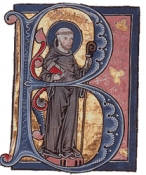
Art during the Eye Ages was different based on the location in Europe also as the menses of time. However, in general, Middle Age art can be divided upward into three primary periods and styles: Byzantine Art, Romanesque Art, and Gothic Art. Much of the art in Europe during the Middle Ages was religious art with Catholic subjects and themes. The different types of art included painting, sculpture, metal piece of work, engraving, stained glass windows, and manuscripts.
The terminate of the Middle Ages is often signaled past a great change in fine art with the start of the Renaissance Period.
Byzantine Art
The get-go of the Center Ages is oftentimes chosen the Dark Ages. This is the catamenia of time from 500 to thou Advertizing. The master form of fine art during that time was Byzantine art produced past artists from the Eastern Roman Empire, also called Byzantium.
Byzantine art was characterized by its lack of realism. The artists did not try to make their paintings realistic, but focused on the symbolism of their art. Paintings were flat with no shadows and the subjects were generally very serious and somber. The subjects of the paintings were about entirely religious with many paintings being of Christ and the Virgin Mary.
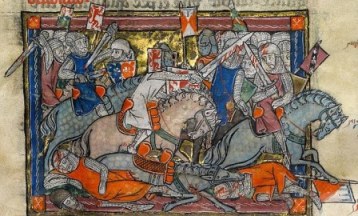
Rochefoucauld Grail past Unknown
Romanesque Art
The period of Romanesque Art started effectually 1000 Advertizement and lasted to around 1300 with the beginning of the Gothic Art period. Art prior to that is called pre-Romanesque. Romanesque art was influenced by both the Romans and Byzantine Art. Its focus was on religion and Christianity. It included architectural details like stained glass fine art, large murals on walls and domed ceilings, and carvings on buildings and columns. Information technology likewise included illuminated manuscript art and sculpture.
Gothic Art
Gothic art grew out of Romanesque fine art. Gothic artists began to utilise brighter colors, dimensions and perspective, and moved toward more realism. They also began to employ more shadows and light in their art and tried out new subject matters beyond merely religion including animals in mythic scenes.
Artists of the Middle Ages
Many of the artists from the early on Middle Ages are unknown to united states. Some of the most famous lived during the latter part of the Middle Ages and are often considered to be part of the beginning of the Renaissance. Here are a few artists that made a name for themselves at the end of the Middle Ages:
- Donatello - An Italian sculpture known for his statues of David, Mary Magdalene, and the Madonna.
- Giotto - Italian artist from the 13th century famous for his frescos in the Scrovegni Chapel in Padua, Italy.
- Benvenuto di Giuseppe - Also chosen Cimabue, this Italian artist from Florence was known for his paintings and mosaics.
- Ambrogio Lorenzetti - An Italian painter of the Gothic motility, he is famous for his frescoes, the Allegory of Good Government and the Allegory of Bad Authorities.
The majority of the literature produced during the Middle Ages was written past religious clerics and monks. Few other people knew how to read and write. Much of what they wrote was hymns, or songs, about God. Some also wrote philosophical documents near religion. One of the most popular books of the Middle Ages was the Golden Legend, by archbishop of Genoa Jacobus de Voragine. It told stories nearly the lives of the Saints during Medieval times. Some secular, significant non-religious, books were written as well.
Here a few of the more famous literary works from the Centre Ages:
- Beowulf - Unknown author. This Epic verse form was written in England, but tells the story of the hero Beowulf in Scandinavia.
- The Canterbury Tales - past Geoffrey Chaucer. A series of tales that portray Chaucer'due south view of English club at the time.
- Caedmon'due south Hymn - This hymn, recorded by a monk, is the oldest surviving Old English poem.
- The Divine Comedy - by Dante Alighieri. Oft considered 1 of the greatest works in globe literature, this story describes Dante'due south view of the afterlife.
- The Book of Margery Kempe - by Margery Kempe. This book is considered to be the first autobiography written in English.
- The Ecclesiastical History of the English People - past Venerable Bede. This history of the English language church earned Bede the championship "Father of English History".
- The Decameron - by Giovanni Boccaccio. This volume has a number of stories and describes life in 14th century Italian republic.
- The Travels of Marco Polo - past Marco Polo. This volume tells the story of how Marco Polo traveled to the far east and China.
- Le Morte d'Arthur - by Sir Thomas Malory. This book tells the story of legendary King Arthur.
- Piers Plowman - past William Langland. This allegorical poem tells of a homo in search of the true Christian life.
- Take a ten question quiz about this page.
- Heed to a recorded reading of this folio:
More subjects on the Middle Ages:
Works Cited
History >> Centre Ages for Kids
Source: https://www.ducksters.com/history/middle_ages_art_literature.php
0 Response to "The Primary Patron of Art in the Middle Ages Was"
Post a Comment